Understanding Mechanical Watch Movements: A Beginner’s Guide
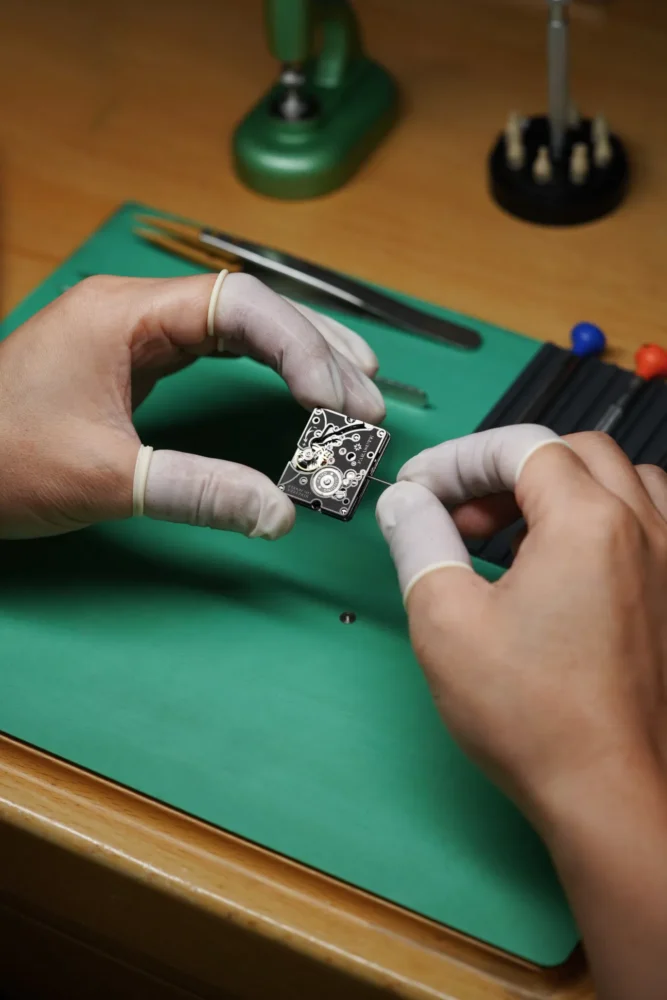
If you’ve ever wondered what makes a mechanical watch tick – literally – you’re in the right place. The movement, or calibre, is the engine of your watch, and understanding it will deepen your appreciation for the craft.
Automatic vs Manual
There are two main types of mechanical movements. Manual movements require daily winding by hand, creating a ritual that many enthusiasts cherish. Automatic movements wind themselves through the natural motion of your wrist – a rotor spins as you move, transferring energy to the mainspring.
The Key Components
Every mechanical movement contains the same fundamental parts: the mainspring (power source), gear train (transmits power), escapement (regulates release), balance wheel (oscillates to keep time), and dial train (moves the hands). The precision with which these components are manufactured and assembled determines the watch’s accuracy.
Why It Matters
A mechanical watch is a miniature universe of engineering. Hundreds of parts working in harmony, powered by nothing but a wound spring and the physics of oscillation. No batteries, no electronics – just centuries-old principles executed with modern precision.
When you wear a Farasute, you’re carrying this engineering legacy on your wrist.